When you meditate, Core uses your Heart Rate Variability (HRV), along with other factors — including your history and your typical baseline measurements — to characterize your physical state in two main ways: Calm and Focus.
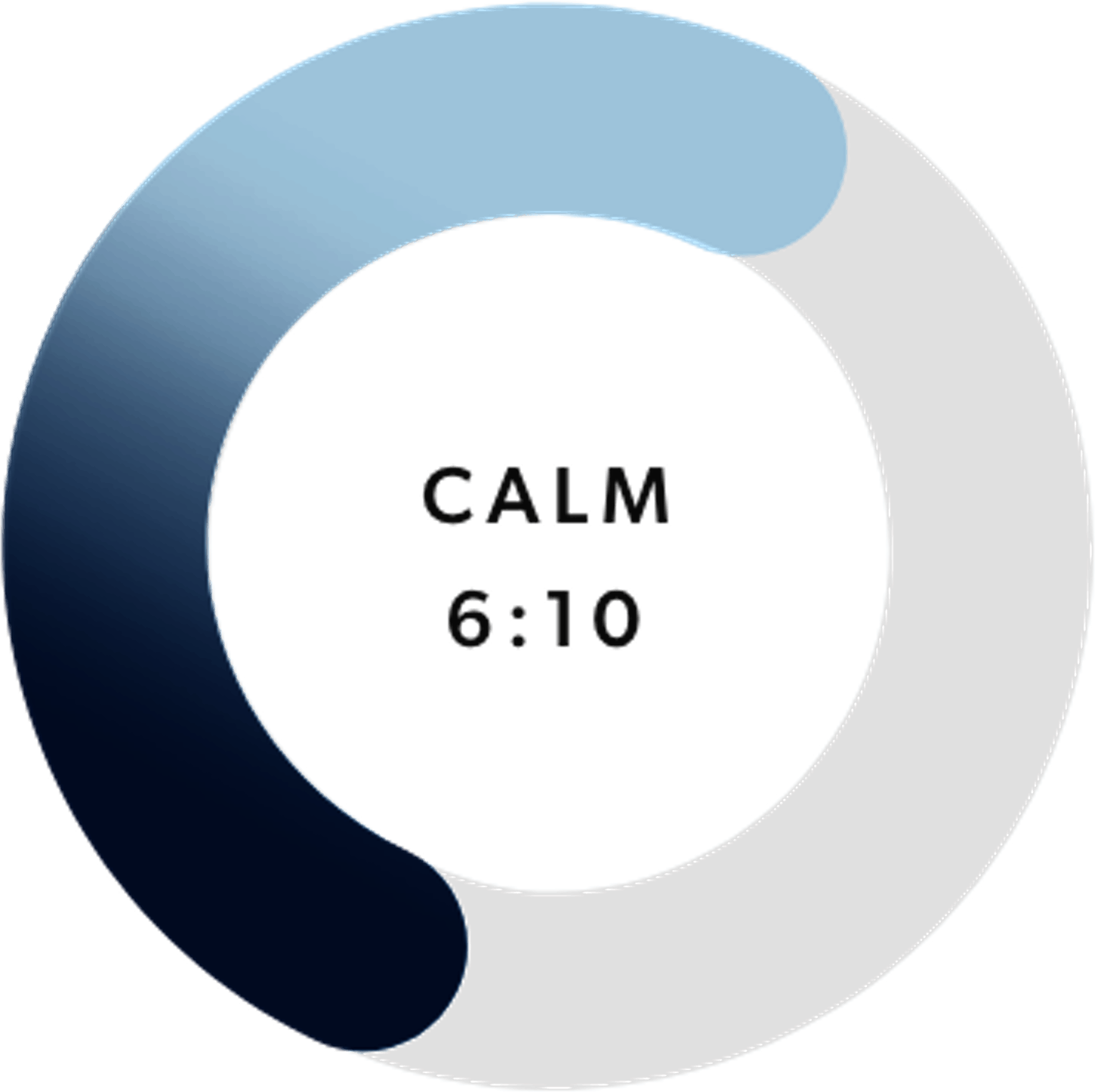 |
Calm represents the periods of time when you’ve brought your mind and body to a state of rest. This is determined by the way that your heart rate changed over the course of the session, and how your heart behaved relative to the typical baseline that has been observed from you in the past. A Calm state is characterized by the dominance of your parasympathetic nervous system. This is the body's "rest-and-digest" response, allowing you to recover after stressful situations. An active parasympathetic nervous system reduces your body's energy consumption by decreasing respiration and heart rate, inhibiting adrenaline production, and increasing digestion.
Core measures your time spent in a Calm state based on your heart rate, its beat-to-beat variability (HRV), and how these metrics changes over the course of the meditation.
|
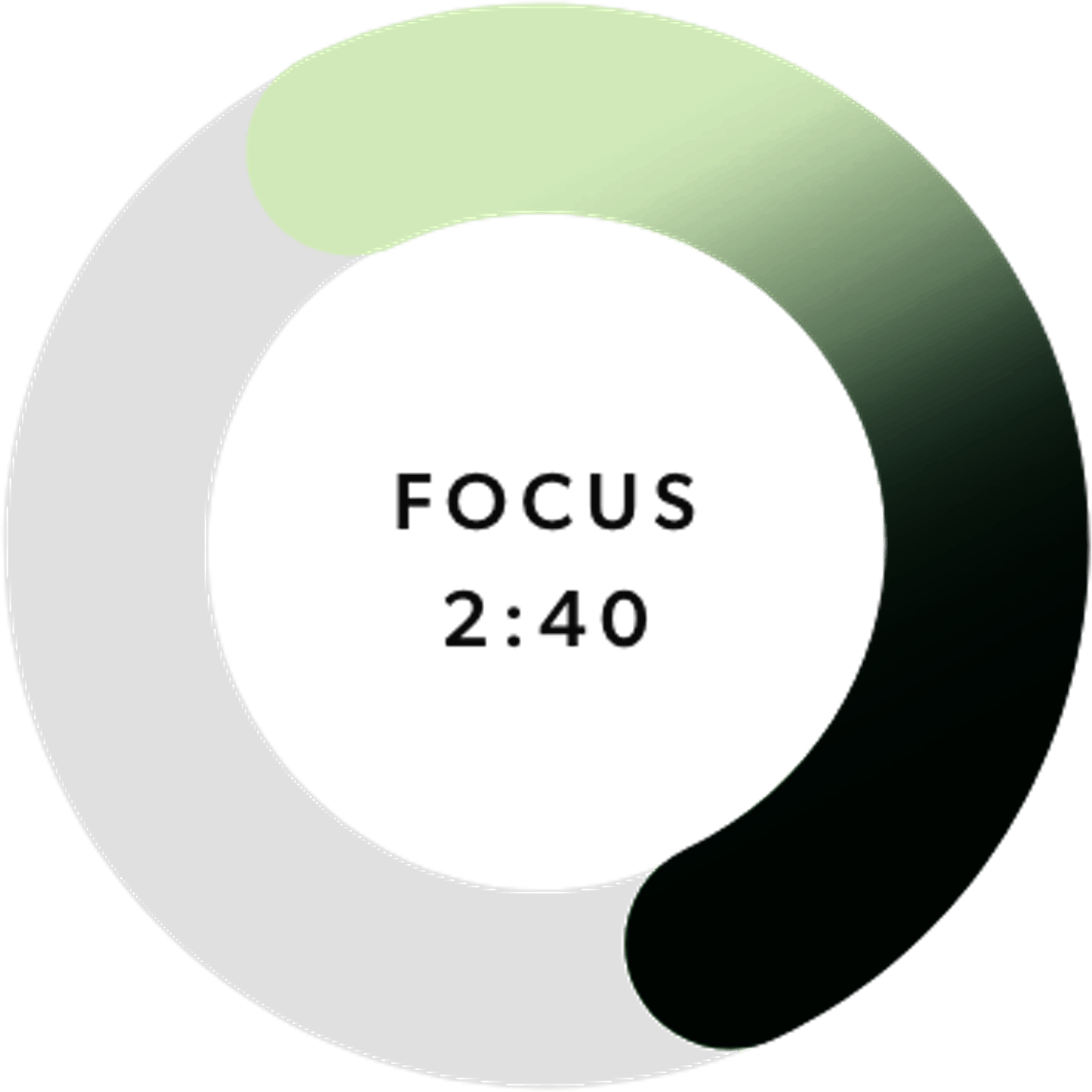 |
Focus is a state in which you are physically relaxed, but your mind and breathing are active and responsive. This state is characterized by a distinct sinusoidal pattern in your heart rhythm over time. This pattern results in a higher HRV, and may actually increase your heart rate. This heart rate pattern has also been referred to as "resonance" or "coherence." It's closely related to the way that your breath and your heart rate can naturally sync together, an phenomenon known as Respiratory Sinus Arrhythmia (RSA.)
Unlike Calm, Focus is not just about getting your nervous system into a "rest-and-digest" state. Meditations that bring you to a state of Focus coordinate your cardiovascular and nervous systems, training and strengthening your parasympathetic response. Decades of studies have shown that this is conducive to tasks requiring mental acuity, problem-solving, and decision-making, as well as athletic activity and physical coordination.
|
Regular meditation practice can, over time, help you achieve Calm and Focus more easily and more rapidly. You might find that different types of meditation techniques and breathing exercises tend to give you more Calm or Focus — everyone is a bit different, but as you continue meditating, you may see patterns begin to emerge.